

North Cyprus vs South Cyprus Property
Buying Property in North Cyprus vs South Cyprus in 2026
North Cyprus vs South Cyprus property is one of the most common comparisons made by international buyers considering Cyprus. Both markets attract investors, retirees and second-home buyers, but they differ significantly in terms of property prices, infrastructure, purchasing procedures, lifestyle and long-term investment goals.
Before moving to Cyprus, I spent years working in the legal field and dealing with real estate disputes. After relocating to the island and helping buyers evaluate different locations and projects, I noticed that one question appears more often than any other:
Should I buy property in North Cyprus or South Cyprus?
The answer is rarely simple. South Cyprus offers an established European Union environment, mature infrastructure and a larger international property market. North Cyprus attracts buyers looking for lower entry prices, modern coastal developments and greater value for money compared with many Mediterranean destinations.
This guide is based not only on market research but also on practical experience working with buyers considering both markets. My goal is not to convince you that one side is better than the other, but to help you understand the advantages and disadvantages of each option so you can make an informed decision.
In this guide, we compare North Cyprus vs South Cyprus property and real estate markets, including prices, infrastructure, buying procedures, lifestyle and investment potential. Buyers who are still exploring different locations may also find it useful to compare the main property regions in Cyprus and browse the current Cyprus property catalog before making a final decision.
North Cyprus vs South Cyprus Property Prices
Property prices are often the biggest factor when buyers compare North Cyprus vs South Cyprus property markets. The difference in entry budgets can be substantial, particularly in coastal locations.
South Cyprus has benefited from strong international demand for many years. As a result, property prices in Limassol, Paphos, Larnaca and Ayia Napa have increased significantly, especially in coastal areas and established residential districts.
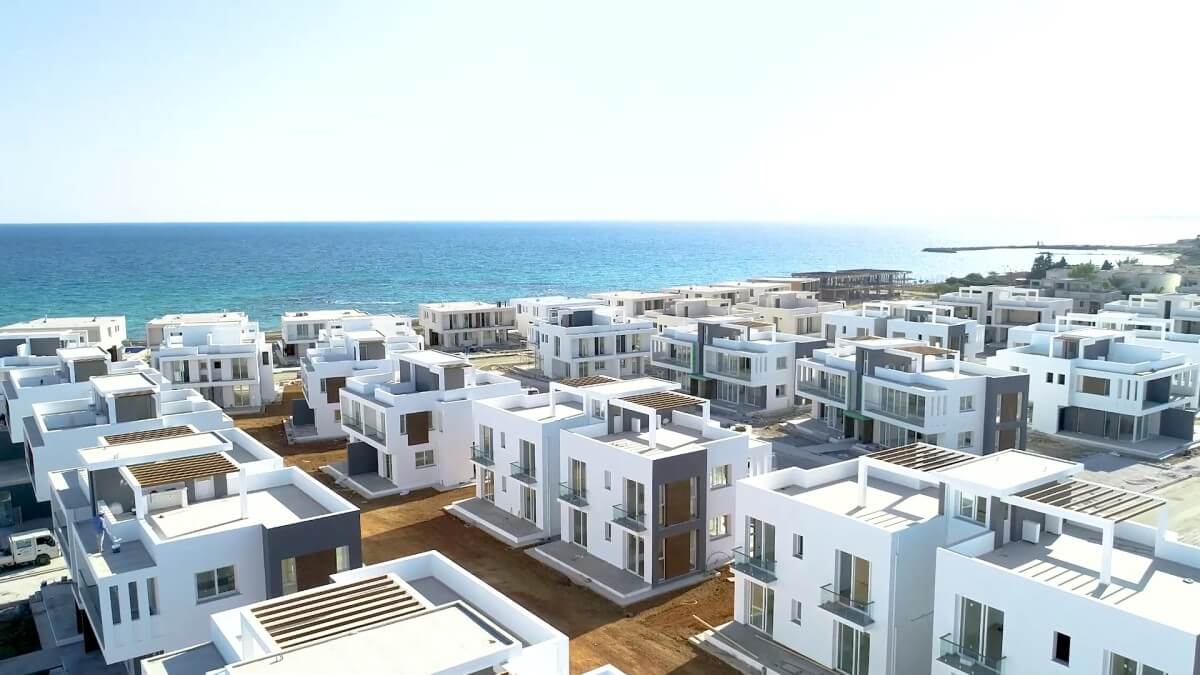
North Cyprus remains one of the most affordable coastal property markets in the Mediterranean. Buyers can still find modern apartments, penthouses and villas close to the sea at price levels that are increasingly difficult to find elsewhere in Southern Europe.
For many buyers comparing North Cyprus vs South Cyprus property, the difference can be substantial. A budget that may purchase a small apartment in a prime South Cyprus location can often provide a larger apartment, penthouse or even a villa in North Cyprus.
For buyers focused on value for money, North Cyprus currently offers a clear advantage. However, South Cyprus may appeal to buyers who prioritise an EU environment, established infrastructure and a larger international property market.
Infrastructure and International Recognition
South Cyprus is part of the European Union and benefits from mature infrastructure.
International airports, modern highways, private hospitals, universities, business services, and shopping centres are widely available throughout the southern part of the island.
Cities such as Limassol and Nicosia have developed into international business centres attracting foreign professionals, investors, and multinational companies.
North Cyprus has experienced significant development over the last decade. New residential projects, marinas, universities, hospitals, restaurants, and leisure facilities have transformed many coastal areas, particularly in regions such as Iskele, Kyrenia, and Esentepe.
While infrastructure is generally more extensive in South Cyprus, many buyers discover that North Cyprus provides everything they need for everyday living, retirement, remote work, or a second home by the sea. Buyers considering relocation can also review our guide on moving to Cyprus before comparing both markets.

Buying Process and Financial Checks
The buying process is another important factor when comparing North Cyprus vs South Cyprus property. Banking procedures, compliance requirements and transaction structures can differ significantly between both markets.
Property transactions in South Cyprus typically involve extensive compliance procedures. Buyers should expect source-of-funds verification, banking checks, and detailed documentation requirements, particularly for international transfers.
These procedures are standard within the European Union and are designed to ensure compliance with financial regulations. Buyers who want to understand the legal framework in more detail may also find our guide to property law in Cyprus useful.
North Cyprus is often perceived as a more flexible property market. While legal due diligence remains essential, buyers may encounter fewer banking and compliance requirements depending on the transaction structure. Flexible payment plans and alternative settlement arrangements are also common in many new developments.
This simplicity is one of the reasons why some international buyers prefer North Cyprus, especially when purchasing a holiday home or investment property. Many also review whether buying property in North Cyprus is safe before making a decision.
Regardless of location, independent legal advice should always be part of the purchasing process. Buyers can learn more about working with a Cyprus property lawyer and review the complete guide to buying property in Cyprus before proceeding.
Rental Potential and Investment Returns
Both North Cyprus and South Cyprus offer opportunities for rental income, but they tend to attract different types of property investors.
South Cyprus generally attracts investors seeking market stability, established tourism, and long-term capital preservation.
Popular locations such as Limassol, Paphos, and Ayia Napa benefit from strong international tourism and a mature rental market.
North Cyprus attracts investors seeking lower entry prices and potentially stronger rental yields relative to purchase cost.
Areas such as Iskele, Kyrenia, Esentepe, and Tatlisu continue to attract buyers looking for holiday rentals and long-term rental opportunities.
Investors should focus on project quality, location, management services and realistic occupancy expectations rather than relying solely on advertised yield figures. It is also worth reviewing typical rental yields in Cyprus property and comparing them with current property prices in Cyprus before making a property investment decision.

North Cyprus vs South Cyprus Lifestyle Comparison
For many buyers comparing North Cyprus or South Cyprus property, lifestyle ultimately becomes the deciding factor.
South Cyprus offers a more international environment with larger urban centres, stronger integration with European systems, extensive infrastructure and established expatriate communities.
North Cyprus offers a quieter atmosphere, lower population density, less traffic, and a more relaxed Mediterranean lifestyle.
Many buyers are attracted to North Cyprus by uncrowded beaches, mountain views, lower living costs and a slower pace of life. South Cyprus, meanwhile, often appeals to buyers who prioritise international connectivity, larger cities and a broader range of business and lifestyle services.
Neither option is universally better.
The right choice depends entirely on your priorities and personal goals.
Property Resale and Exit Strategy
Future resale is one of the most important considerations when comparing North Cyprus vs South Cyprus property.
South Cyprus benefits from a larger and more established international buyer pool. As a member of the European Union, it attracts buyers seeking relocation, retirement, business opportunities and long-term property ownership within a familiar regulatory environment.
North Cyprus, however, has seen significant growth in international demand over recent years, particularly among buyers seeking coastal property, holiday homes and investment opportunities.
An important practical consideration is understanding how future resale, ownership transfer and capital repatriation may work in different markets before making a property purchase.
For many international buyers, the key issue is not the purchase itself but understanding the future resale process, transfer of ownership, and planning an effective exit strategy before investing.
As with any property investment, location, project quality, and market conditions remain the primary factors affecting resale performance.
Who Should Consider the European Side of Cyprus?
South Cyprus, sometimes referred to as the European or Greek side of Cyprus, may be more suitable for buyers who:
- Prefer an EU-regulated environment
- Prioritise extensive infrastructure
- Plan full-time relocation
- Need access to international business networks
- Focus on long-term market stability
Buyers interested in South Cyprus often explore locations such as Limassol, Paphos, and Larnaca, where established infrastructure, international communities and year-round services support both relocation and long-term property ownership. For many buyers, South Cyprus combines Mediterranean lifestyle with the advantages of living and investing within a European Union environment.
Who Should Consider the Turkish Side of Cyprus?
North Cyprus, often referred to as the Turkish side of Cyprus, may be more suitable for buyers who:
- Want lower entry prices
- Seek better value for money
- Prefer a quieter coastal lifestyle
- Focus on rental income opportunities
- Want modern properties close to the sea at more affordable prices
Buyers considering North Cyprus often compare coastal areas such as Iskele, Kyrenia, and Esentepe, where modern developments, sea proximity, flexible payment plans and lower entry prices remain key advantages.
Property Risks in North Cyprus and South Cyprus
Risk is one of the most important factors for buyers comparing North Cyprus and South Cyprus property. Every real estate investment involves both opportunities and challenges, which is why legal, financial and long-term considerations should be carefully evaluated before purchasing.
South Cyprus operates within the European Union and is based on an internationally recognised legal system. Many buyers view this as an additional element of stability and predictability when purchasing property.
North Cyprus attracts buyers with lower entry prices, modern coastal developments and a wider selection of properties in popular seaside locations. At the same time, buyers should carefully review ownership status, property documentation and the overall transaction process.
Regardless of which side of the island you choose, thorough due diligence, title verification and independent legal advice remain essential. Buyers can also review our guide on whether buying property in Cyprus is safe to better understand the key considerations before making a purchase decision.
Frequently Asked Questions
Is North Cyprus property cheaper than South Cyprus?
In most coastal locations, North Cyprus property remains significantly more affordable than comparable property in South Cyprus. Lower entry prices are one of the main reasons why many international buyers consider the Turkish side of Cyprus for investment or a second home.
Can foreigners buy property in both North Cyprus and South Cyprus?
Foreign buyers can purchase property in both North Cyprus and South Cyprus, although legal procedures, compliance requirements and purchasing processes differ between the two markets.
Which side offers better rental yields?
Rental performance depends on location, property type and management quality. Many investors choose North Cyprus for lower entry prices and potentially stronger rental yields, while South Cyprus is often preferred for market stability and established tourism demand.
Should I choose the Greek side or the Turkish side of Cyprus?
The answer depends on your priorities. Buyers focused on European Union integration, established infrastructure and long-term relocation often prefer the Greek side of Cyprus. Buyers seeking lower entry prices, flexible payment structures and coastal property opportunities often consider the Turkish side of Cyprus.
Is North Cyprus better than South Cyprus for investment?
Neither market is universally better. North Cyprus and South Cyprus appeal to different investor profiles. The right choice depends on your budget, risk tolerance, investment strategy and long-term objectives.
Final Thoughts
Both North Cyprus and South Cyprus offer attractive opportunities for international property buyers.
South Cyprus provides EU integration, mature infrastructure, and an established international market.
North Cyprus offers affordability, modern coastal developments, attractive entry prices, and excellent value relative to purchase cost.
When comparing North Cyprus vs South Cyprus property, the most important question is not which market is better overall, but which market is better for your personal goals.
Which side of Cyprus – Greek or Turkish – is better for your goals?
The answer depends on your budget, lifestyle preferences, investment strategy, and long-term plans.
Many buyers ultimately choose to view properties in both North Cyprus and South Cyprus before making a final decision. Comparing locations in person often provides far more clarity than months of online research. Whether you are considering the European or Greek side of Cyprus, the Turkish side of Cyprus, or simply comparing North Cyprus or South Cyprus property, a structured property viewing visit in Cyprus can be one of the most effective ways to evaluate both markets and identify the locations that best match your goals.
Compare North Cyprus and South Cyprus in Person
Online research can help you understand the differences between North Cyprus and South Cyprus, but visiting both markets often provides a much clearer picture. Property quality, locations, infrastructure and lifestyle can vary significantly from one area to another.
A structured viewing visit allows you to compare locations, evaluate real properties and determine whether North Cyprus or South Cyprus best matches your budget, lifestyle preferences, investment strategy and long-term goals.